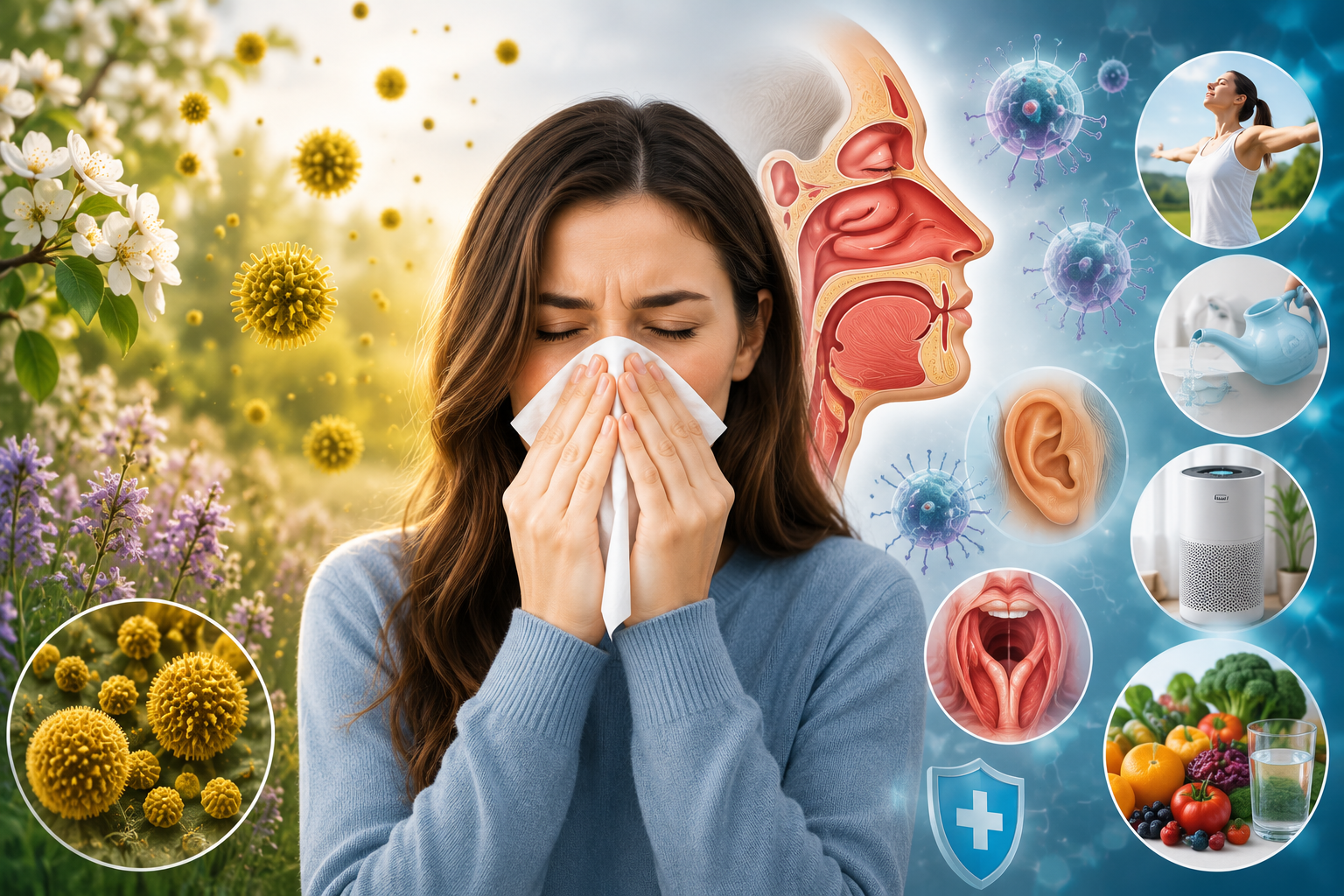
Understanding Seasonal Allergies: ENT and General Health Perspective
Seasonal allergies affect millions of people every year. Triggered by environmental allergens such as pollen, dust, and mold, allergies can significantly impact daily life. They often cause ENT symptoms and may worsen existing respiratory conditions.
Early recognition of allergy symptoms and proper treatment can help prevent complications and improve overall quality of life.
Seasonal allergies can affect the nose, throat, ears, and overall health, making timely diagnosis and treatment essential.
Symptoms
- Sneezing
- Runny nose
- Nasal congestion
- Itchy eyes
- Watery eyes
- Throat irritation
- Postnasal drip
- Fatigue
Common Causes
Pollen
One of the most common seasonal allergy triggers, especially during spring and fall.
Dust Mites
Frequently found indoors and capable of triggering allergy symptoms throughout the year.
Mold Spores
Mold levels often increase during humid weather and can worsen allergy symptoms.
Pet Dander
Pet dander can trigger allergy symptoms year-round in sensitive individuals.
Risk Factors
- Family history of allergies
- Asthma
- Environmental exposure
- Pollution
- Smoking exposure
Diagnosis
- Medical history review
- Physical examination
- Allergy testing
- Blood tests when required
Treatment Options
- Antihistamines
- Nasal sprays
- Saline rinses
- Allergy avoidance measures
- Immunotherapy in selected cases
Prevention Tips
- Monitor pollen levels regularly
- Keep windows closed during peak pollen seasons
- Use air purifiers indoors
- Maintain indoor cleanliness
- Wear masks during high pollen exposure
When Should You Visit a Doctor?
- Persistent allergy symptoms
- Frequent sinus infections
- Breathing difficulties
- Poor response to medications
- Symptoms affecting quality of life
Frequently Asked Questions
What causes seasonal allergies?
Seasonal allergies occur when the immune system overreacts to harmless environmental substances such as pollen.
Are allergies contagious?
No. Allergies cannot spread from one person to another.
Can allergies cause sore throat?
Yes. Postnasal drip commonly irritates the throat and may lead to discomfort.
Can allergies affect sleep?
Yes. Nasal congestion and breathing difficulties often disrupt sleep quality.
When should allergy testing be performed?
Allergy testing is recommended when symptoms are severe, persistent, or difficult to control.
Can children develop seasonal allergies?
Yes. Seasonal allergies can occur at any age, including childhood.
Conclusion
Seasonal allergies can affect both ENT health and overall well-being. Early diagnosis and proper management can significantly improve quality of life and reduce the risk of complications.
Krishna Clinics
Krishna Clinics provides comprehensive evaluation and treatment for allergies, sinus conditions, and related ENT concerns. Our experienced healthcare team offers personalized care to help you breathe easier, feel better, and maintain long-term health throughout the year.